Saturday, February 25, 2023

February 8th - Cowlitz and Clark

Barlow Point Road, Cowlitz County 6:30 AM

Astronomical Twilight


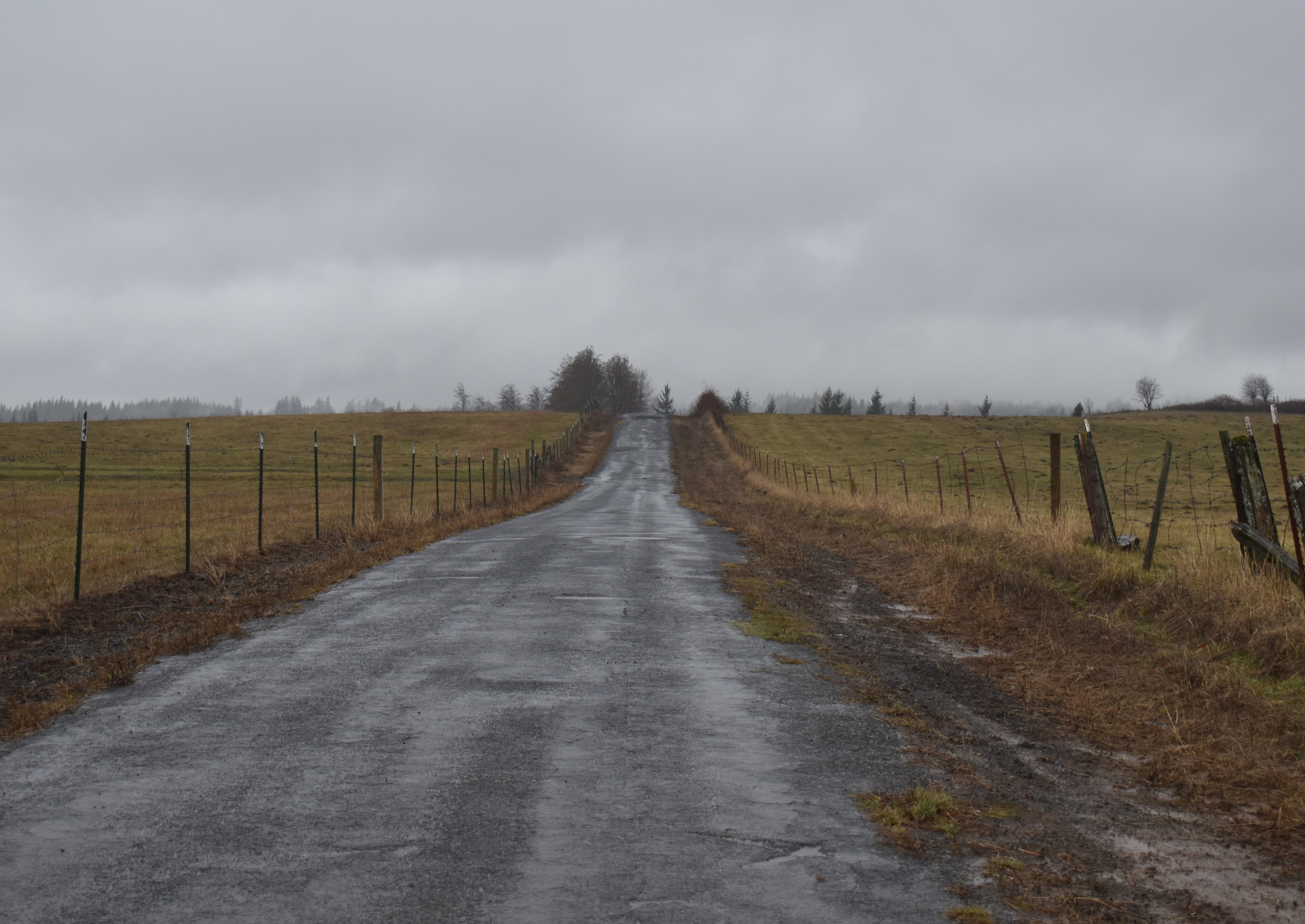
There was a blanket of fog resting on the fields north of the road as I rolled in. This was the road where I'd met the gentleman and talked to him about Barn Owls, and I thought I had gotten there at about the right time. Barn Owl o'clock is a time that I've tried to get dialed in. It seems to be a time that plays with two twilights: astronomical and civil. 

Civil Twilight


During astronomical twilight, we would pack up the telescope for the night - that's what I remember from college. The sky would lighten up just enough to make observations challenging, and the astronomer's "workday" would be done. It's still too dark to walk around properly, so in a sense it's still night. That was the twilight I was viewing as I looked across the field, scanning for any motion, and listening for a screech. 

Interestingly, you're more likely to hear a Barn Owl screech than a screech-owl. It's an eerie banshee sound that always gives me goosebumps. There are times when just being out looking for owls gives me goosebumps, but there's definitely something I love about it - especially in twilight like this. The world is usually still asleep, and most birds are as well, so there's a kind of quiet that . . . we just don't get. We just don't get enough. 

The owl drifted in coming in quietly at the end of its workday, no more than three feet above the ground, and swooped up into the opening in the barn.

Barn Owl (77). On the one hand, wow - over halfway to the goal of 150 for the year, and it was just barely over a month into this little quest. But goodness those next 73 birds would be a challenge, as more and more of the more common birds leave the list. Any owl is a good bird for the year though, and it was a great way to start the day. 


I went back through the town of Longview to I5, and actually tried Woodland Bottoms for Short-eared Owls but came up empty. Not wanting to linger too long, I continued south to my morning destination, Ridgefield National Wildlife Refuge in Clark County. 

Moon in the Columbia


Ridgefield NWR - River S Unit


Back in Clark County! My intentionally neglected county this year. I know it's a relatively small county, it's got a larger population than any of the other three I'm birding this year, and it has some pretty productive birding spots. Rather than spend too much time sitting in traffic to chase sightings, I am kind of hoping to hit a single productive spot each month in Clark, and Ridgefield is an obvious winter stop for that! I was sitting at a nice even 50 species from my January trip to Stiegerwald, and made that 51 with House Sparrows along the way before I reached the refuge. 

It continued to be a beautiful morning. The sun made for great views as I got in line for the loop. And that's how this locale is birded, unfortunately - you get in your car, get in line, crawl along, occasionally stopping to put some optics on birds from the car. My other goal with Clark had been to make my single stops a walking/hiking stop if at all possible, but it just wasn't an option here. 

At the restrooms at the start of the loop, there are a few feeders - these gave me a Steller's Jay (52, for Clark County now), which joined some California Scrub-Jays, House Finches, and Red-winged Blackbirds. Cackling and Canada Geese were nearly always present, sometimes in the hundreds, in the fields around me as I started driving. I kept an eye on these for possible Greater White-fronted or Snow Geese. 

Early ponds were full of American Coots, American Wigeon, Gadwall, Northern Pintail, Green-winged Teal, Great Blue Heron, and Ring-necked Ducks. I was also able to add Pied-billed Grebe (53), and Ruddy Duck (54). It was admittedly nice to be able to see so many birds at such short range, and I never felt pressured to move along - people generally negotiated the traffic situation fairly well (with the notable exception of a shouting and swearing match that I overheard at one point behind me. . . )

Freedom, solitude, quiet . . . all things I'd enjoyed in the bit of owling I'd done in the morning were not completely present during this visit to Ridgefield! Dipping into a rare bit of tree-lined road, I stopped and listened, enjoying Golden-crowned and Ruby-crowned Kinglets (55), as well as a Pacific Wren (56), Song Sparrows, and Spotted Towhees. Further up, I heard White-breasted Nuthatch (57), which is a bird I'd love to see this year as well. On this loop, I still wasn't feeling great about getting out of the car and making efforts to see it closer. 


There were also some nice stretches here for shorebirds. Killdeer were fairly common, of course! I also got a large flock of Dunlin (58), and a single Greater Yellowlegs (59). A Black Phoebe (60) also called from out of sight - a fairly regular bird for the refuge.
Dunlin foraging in the sprinkles

As I reached the final part of the loop, I started to see more raptors, including Red-tailed Hawk, and Nothern Harrier. Above me at one point, I got a clear listen to a Red-shouldered Hawk (61), but the darn thing was almost directly above me, and I couldn't really get out of the car. Driving up and around a bend, I scanned for it in the trees where I'd been. Nothing. . . nothing. . . and then it flew out from cover. I got a butt shot of it as it moved to cover on the far side of the field. 

Getting the cold shoulder from a Red-shouldered Hawk


Sandhill Cranes (62) flew overhead, and then I finally got some big white birds: Trumpeter Swans (63), and a very cooperative Great Egret (64) right outside of the window. American Bittern, and Rough-legged Hawk - those were two species I'd really hoped to find, but missed on this trip, but it was still a productive bit of birding for the morning. 

Trumpeter Swan

At this point, I had to find a place to plug in, unfortunately. Work emails loomed, and I also wanted to do a quick check of eBird sightings to get a good plan for the rest of the day. I swung down to historic Ridgefield. I'd not been to this part of town before, and I really may need to return! All of the restaurants were closed at this hour, but I did see a sign for an upcoming bluegrass concert in March outside of one of the pubs. That may just be worth planning around for my March trip!

I may eventually get over the excitement of Great Egrets this year. . . but not yet

A Starbucks, closer to the freeway, gave me a place to collect myself. I shot off some editorial reviews and set my eyes back on Woodland Bottoms in Cowlitz County. 

Woodland Bottoms

Boy there are a few birds that I have expected to find here that I keep missing. Rough-legged Hawk and Western Meadowlark are the most notable. Tundra Swans (78 - back to the Cowlitz list now) flew overhead to reduce that challenging list by one. I stopped at one of the spots that looks out to the Columbia, and watched Greater Scaup floating by, looking for Redheads that had been reported off and on during the week. They're a tough bird in the county! While I missed them, I did end up hearing California Quail (79) - a species that had once been more regular in Woodland Bottoms but had become less common over time. 

Kalama

I think I will finally remember this. It's not "CAL uh ma" (rhying approximately with Panama) nor "kuh LAHM uh" (rhying with former Mariner's pitcher John Halama. . . you're welcome for that random reference, but it works for me), but "kuh LAMB uh", kind of like. . . Shama Lama Ding Dong. I guess my thoughts of opening a Zoo in Kalama will have to be put aside. Maybe a tea shop instead? 

TLDR: Kalama Tea, not Kalama Zoo. 

What a delightfully unproductive start! I got parked near McMenamin's on the waterfront and started to walk. . . and look at the Columbia. . . and quickly realized this was a "Nothing to see here! Please move along!" situation. I drove out to the end of the spit with the same result. 

1. Left key on car
2. Key fell off
3. Meeker Pond
4. Sportsmen's Club Road
5. Kalama Mouth with Russ
And somewhere around here, I put my car key - the little keyless start fob - on top of my car. I swear to you I don't remember doing this. But there's always a bit of juggling going on with keys, binoculars, camera, and scope. At any rate, I got driving, taking a road that ran parallel to the highway north. It eventually loops back around south, where I hoped to hop on Meeker Road. And that's when I heard the clack-clack-bang of something on the roof of my car. 

I looked down to make sure my binocs and camera lenses were all present. They were. I pulled over to do a more careful search. . . and my car told me that there was no key detected, and that it was in time out until I figured out where the key had gone. 

. . . 

Walking back up Frontage Road a couple hundred yards, I finally saw the little black fob in the road.

*thumpthump*

*thumpthump*

Fun fact. these little fobs can get run over several times, and still work! Now. . . to be fair. . . I do need to be nearly inside my car before it will detect the key. This may be a problem at some later date, but for now. Phew! Kalama Tea averted. 

Up Meeker Road, I pulled over to view Meeker Pond. This. . . did not feel safe. I found some Northern Pintails (80), got off the shoulder, and continued north. 

Sportsmen's Club Road was a neat stop! I knew that a few birds had been seen. . . somewhere around here, but I was a little fuzzy on the exact location. Nonetheless, I got some nice views of gulls - California (81), Western (82), Short-billed, and Ring-billed. It was a little tricky, trying to get close enough to where the gulls were roosting out on the river, as I tried to get photos. As I stood and scanned, I realized that my feet were getting a little wet! What a fun little reminder that even here, you can get a little bit of in and out from the tides. 


I was still confused on where to look for a Red-necked Grebe and Red-breasted Merganser than had been seen along the Columbia near Kalama. I texted Russ, my Cowlitz County connection, and his advice was "Follow me!"

Red-breasted Merganser
Russ pulled up next to my car as I walked back to it - he'd been out birding himself and wanted to look for the merganser. The comical delivery of the text was exactly the kind of thing that I've come to expect from him. I'd say the same about finding him out birding. He gets out after those birds! I followed him around to the mouth of the Kalama River - on the south side, rather than the North. My car's outdated GPS did not really give any hints as to how we would get there, following a gravel road out behind some warehouses to a nice open spot. But we got there, and pulled out the optics, and found our target - a Red-breasted Merganser (83). 

We talked a bit about separating these from Common Mergansers. Nearly every field guide shows the Red-breasteds with a spiky mohawk, and the Commons with a slicked back hairdo. But Commons can show the spikes too! It really does come down to the breast, where Commons show a lot of white, clearly delineated from their heads and necks, and also, Russ pointed out, to color. Commons are a much deeper red, while Red-breasted Mergansers had a lighter, orange-y tinge to their head. 


That ended my February trip to the Southwest corner of the state! I was quite happy with the start to the year. Cowlitz was off to a great start at 83. Wahkiakum had only gotten a single day of attention from me in January but was sitting in second place with 73 (although it has since moved into third place behind my home county - King, where I've slowly been adding to the year list (75)). Clark, despite my neglectful approach, was at 64, and Skamania had given me 60 species in a single trip during an intermittent February downpour.


Am I on track? I have nearly no idea. I do know that in many of these years, things get quiet during October. . . November. . . December. . .but I may just be scrambling to find some winter birds during those months this year. Should be exciting!


Thursday, February 23, 2023

February 6th and 7th - A Start in Skamania

February 6th - scouting

Distant view of the Columbia River from Little Buck Creek Road, Skamania County

This February trip followed a format familiar to my Klickitat trips last year; I combined a trip to Ellensburg (bringing my son back to college), and a trip to Yakima (to see my mom) with the birding trip. The drive from Yakima to Bingen happened early enough on the 6th that I had time to slip into Skamania and poke around a little bit in the afternoon. 

Traditional Shot

Skamania was an ice rink during my January trips, and it's not close enough to allow for a quick unplanned trip. So, it was sitting at 0.0 species for the year as I finally crossed into Skamania. The White Salmon River empties into the Columbia right at the Klickitat/Skamania border, with Cook-Underwood Road rising up the hill northward immediately. I hopped on this road and found a spot to view the cove below the bridge, picking up my first two species for the year - Mallard (1) and Ring-necked Duck (2).


It was late afternoon, so I wasn't expecting a lot of bird activity. Nonetheless, I did have some hopes for finding Wild Turkeys - a regular fixture along this road. As the road finally broke from the river, and carried me westward, the area was different from what I was used to for Skamania. It seemed like I was always either down near the Columbia, or up in the mountains in the past. Here, I was surprisingly in wine country!

Vineyards from Cook-Underwood Road

Vineyards dotted the road upslope, but downslope, I saw some birds in a field, so I pulled over to investigate. Not only were there a few sparrows flitting around - Golden-crowned Sparrow (3), and Dark-eyed Junco (4) - the field also had a pair of California Quail (5), code 3 birds. The "Bad Math" and "Running Tally and Needs Lists" pages at right explain all of the codes, but in short, code 3 birds are seen annually in the county, but are often tough to find. 

What makes a bird tough? They may live in inaccessible habitat. They may have a very small range. They may only come through during a small range of dates, during migration. In other cases, they might also be pretty skulky. I'd say the latter, combined with small populations, make California Quail a little tougher, and I was glad to have them on the year list. 

California Scrub Jay (6), Steller's Jay (7), and Black-capped Chickadee (8) added to the list as well. With no turkeys in sight, I turned up Little Buck Creek Road. I saw no birds, heard no birds whenever I stopped! I tried calling for Northern Pygmy Owl, but it just remained quiet. I took one last peek around, and returned to Bingen where I stayed the night (for about 40 dollars!) at the Society House. Not bad for a quiet, comfortable bunk, and a free visit to the soaking spa. Much of my time there was spent at the large tables in the common area, typing away on a writing project. With ten different projects running, it's never going to be completely free from these responsibilities!

I mean 8, but. . . it's been a couple of weeks now. I'm done editing these! :D


February 7th 

What a day! The weather report (collected through Wilson, my birding friend in the west end of Skamania) was for downpours on the west side, and sprinkles to the east. I would have to see how the morning went, but the forecast definitely shaped the plans. Early in the year, the plan is *always* owls, and this morning was no exception. Owls had been seen and heard around Stevenson in previous weeks, so that was the first place my mind went. 

BirdWeb is a resource I have used time and again to help me. In this case, it was the map for Northern Saw-whet Owls that grabbed my attention. Their winter range is supposedly all along the Columbia, but it also extends up northward from Stevenson, along Rock Creek. I figured this area, up away from the highway, would be a nice place to explore early in the morning. 

Stevenson

As I drove from Bingen to Stevenson, I stopped here and there, calling for owls at the Spring Creek Hatchery, and Dog Mountain trailhead. Eventually, I did make it to Stevenson, stopping near Stevenson High School, an area where Great Horned Owls had been reported.  I got out, waited, called a little. . . waited for cars to pass, waited for cars to pass, listened. . . even at 6 A.M., the traffic past here was just thick enough that I decided to head up and north a little bit. 

Loop Road looked pretty tempting - loops are always the best! You don't have to drive a long length of road, and then just drive it all back. So, I started up, periodically stopping to call for owls. On a very early stop, I got calls down-slope from the road from a Great Horned Owl (9). My car's GPS encouraged me onward as I spent the dark hours circling back towards town. . . but then Loop Road stopped being one. Stopped being a loop. Stopped being a road. Apparently, a slide took out part of the road a few years back. 

Naz-Goose

I celebrated this surprise with a little nap before heading back down into Stevenson. My first stop as the sun came up was the Rock Creek Mill Pond. I was greeted at the parking lot by a flock of Naz-Goose, barnyard monstrosities, likely bred by Saruman. Mixed in with them, however, was a Greater White-fronted Goose (10). A pair of Canada Geese (11) called from the Mill Pond itself, never seeming more civil than in close comparison to these big aggressive geese.


The pond held a lot of waterfowl. It was just starting to get light, so my efforts to scope the whole pond would wait for another day. Nonetheless, I picked up some new waterfowl: Gadwall (12), American Wigeon (13), Lesser Scaup (14), and Bufflehead (15). A few common birds were kind enough to start singing as well, including Steller's Jay, and Song Sparrow (16).  I considered staying longer, of course, but I had a 9 A.M. appointment. . . at a winery! 

Willow Wine Cellars sits on the East end of the county, and I was headed West, so I had set up a fairly early time to try some wines before I left for the West side. I had travelled fairly far West just to get to Stevenson, so I could neither dilly nor dally too long at any spot. Still, the lure of the Columbia was strong. The Stevenson waterfront frequently pulled in some good birds, so I went through downtown (picking up House Sparrow (17) and European Starling (18)) and scoped the water.


Scaup it already
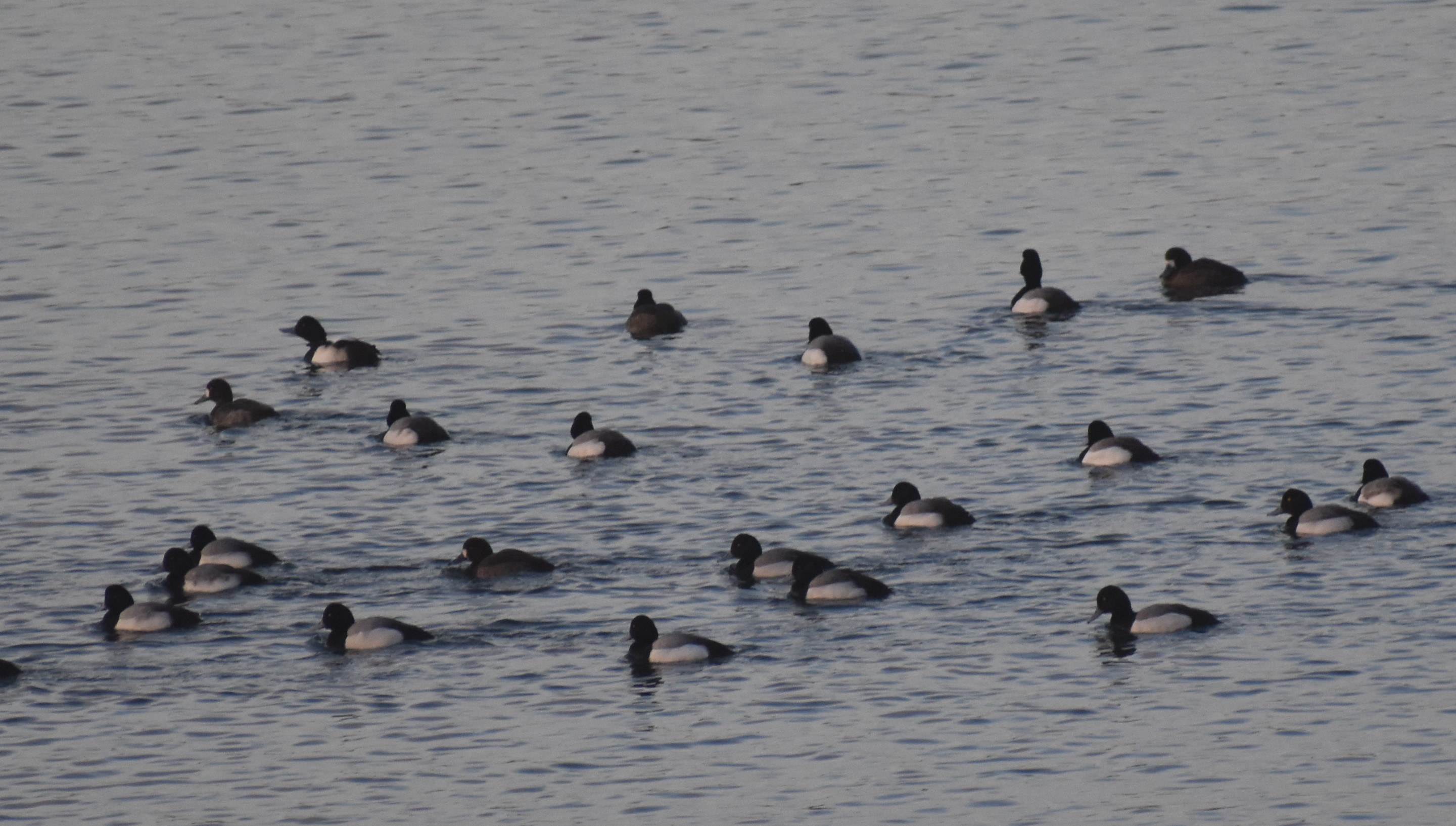
Greater Scaup (19). I can't even tell you how many Greater Scaup I came across during the day, during the whole trip, really. I'd scan them for surprises like Redhead or Tufted Duck every time, but. . . there were just a lot of them. Everywhere. Also out on the water: Western Grebe (20), Horned Grebe (21), Hooded and Common Mergansers (22, 23), Double-crested Cormorant (24), and Common Loon (25). American Crows (26) called from down the road, and I figured it might be a good time to start down the highway to the East.

Common Loon on the Columbia

Wind River Mouth

This was a great little spot. A lot of sand out in the river provided lots of places for gulls to roost and forage. This included Short-billed Gulls (27), and Ring-billed Gulls (28). Common Goldeneyes (29) were in the river, and Bald Eagles (30), and Common Ravens (31) were also found during my stop, as well as Rock Pigeons (32) on the bridge. 

Home Valley Park/Spring Creek Fish Hatchery

Two other stops - one at Home Valley Park, where I had Pacific Wren (33) and Spotted Towhee (34) in a light sprinkle. Then, from Spring Creek Fish Hatchery, I had a pair of Barrow's Goldeneyes (35). All of these stops along the Columbia were brief once I'd left Stevenson, but it was still nice to have the year list slowly tick upwards.

Willow Wine Cellars

Wine A.M.?

I continued to Cook Underwood Road, heading up the hill and northward, as I had the day before. I tried the same field for sparrows and quail but found nothing in the sprinkly weather. I continued to hope for Wild Turkey as well but saw none along the road - just beautiful views of vineyards and the Columbia far below. 

Brendan and Tarnna Simpers moved to the area in 2011. Actually, in keeping with themes from the year before in Klickitat County - it turns out that this was a return to the area for Tarnna. So many people seem to leave the area and return. This is at least what I've seen from many of the people I've talked to at restaurants, wineries, and hotels along the way. Brendan was there to meet me that day, with some time to taste their wines in their barn. 

I tasted only good wines! A rose (which I bought), a chardonnay, and a pair of reds (cabernet franc being the primary grape across the board on this particular morning) - all were very easy drinking. It was so nice to hear their story. It turns out that the willow was a reference to a tree that had given the couple an extraordinary bit of shade on a hot day. My own kids spent many a day in their childhood underneath a huge corkscrew willow in our backyard at home, so something about this really touched me. 

I of course had to check in about birds. Not anything like finches or sparrows. People have those birds around them constantly without a notice. But I knew that I could get the skinny on Wild Turkeys if I asked. "Gobble Gobble Gobble!!" their daughter called out from behind a wine barrel - she'd been home sick from school earlier in the week and had joined us for the tasting. It turns out they really are pretty common residents along the road, and Brendan had seen them that very morning. I got some help on where to look for them, but still missed them on that morning. "Birds fly," my old friend Pete would have said astutely. Maybe not very often if they are turkeys, but the point stands. 


Cook-Underwood Road

Whole lotta this
I continued westward on Cook-Underwood Road, wanting to follow its loop all the way back to Highway 4. The road was clear, and I picked up a few birds along the way: Red-tailed Hawk (36), Red-breasted Nuthatch (37), and Chestnut-backed Chickadee (38). 

Much of the drive became pretty homogeneous as I got farther upslope away from the Columbia. The road takes a turn from northward to southward at the Willard National Fish Hatchery. I really had hoped that the rushing river here (the Little White Salmon River) would have an American Dipper, but none were found. I did see a pair of young men pull up with a kayak, ready to hop into the turbulent waters, and was pretty amazed at the skill/optimism that must have been involved.

Little White Salmon River

Little White Salmon Fish Hatchery/Drano Lake

The Little White Salmon River empties through the eponymous fish hatchery, and into Drano Lake, which in turn empties into the Columbia. This was a great little stop! The road to the hatchery hugs the north and west edges of Drano Lake. Along this stretch, I found a Great Blue Heron (39), and Western Gull (40).

Great Blue Heron and... (one-legged?) Western Gull

Near the end of the road, mudflats were a little closer, and I was able to add more birds, including a Glaucous-winged Gull (41), American Coots (42), and Pied-billed Grebe (43). Ring-necked Ducks, Common and Hooded Mergansers were also quite numerous, and Horned Grebes were found once I circled back around to the Drano Lake parking lot. This is a great spot, with rarities like Tufted Duck, Arctic Tern, Surf Scoter, and Pacific Loon having been found in the lake over the years. I'll be back!

Go. . . West? Strawberry Island

Rain was already falling, and it wasn't supposed to be any better as I headed West through the Gorge, but it just had to be done. As I passed the Bonneville Dam, and reached the town of North Bonneville, I turned off towards Hamilton Island, or "Strawberry Island", as it was named by Lewis and Clark. I kind of like the latter. EBird does as well, so we're in agreement there. 

Lesser Goldfinches

This island is criss-crossed with trails and seems to have the right mix of habitat to pull in a wide range of bird species. I decided to make a hike of it, and the rain, for the most part, took it easy on me. This was well worth it, with a total of 24 species seen despite the day's weather. One of the first new birds for the day was an American Kestrel (44), seen as I drove to the parking area. Very early in the hike, I added a tough bird for the county, as some Lesser Goldfinches (45) called from just off of the trail. I'm still slow in figuring out their calls, but I feel like I'm getting better with them over time!


Anna's Hummingbird (46) and Pileated Woodpecker (47) called from near and far, respectively. Ruby-crowned and Golden-crowned Kinglets (48 and 49) joined some Black-capped Chickadees, and a very vocal Bewick's Wren (50) - as if there is any other kind of Bewick's Wren. American Robins (51) had not been easy to find on trips to Skamania, but they were here in the dozens, as were a few other common birds, including Fox Sparrow (52), Northern Flicker (53), and Red-winged Blackbird (54). 

I did get a little turned around on the way back, just as the rain decided I'd had enough dry time. This brought me to a trail that gave me a nice view of my car from above. I finally found a trail that went down safely from this berm, and tried to figure out what my next move would be. 


Skamania Landing

What an odd place this is. Beautiful, varied habitat, and I know that we explored more of it when I'd been here with Wilson, but on this particular day, the DON'T PARK ANYWHERE signs were particularly foreboding. I didn't want to get on the bad side of the good residents of Skamania Landing. For what it's worth, I also did not want to get completely drenched. Had I stepped out of my car at all, I certainly would have been. I scanned the water, finding a Trumpeter Swan (55), and two ducks I'd figured I would find here after missing them all day: Green-winged Teal (56) and Northern Pintail (57). There were plenty of other waterfowl, including Canada Geese, Mallards, Ring-necked Ducks, Gadwall, and Bufflehead. A dozen wigeon all turned out to be American, leaving Eurasian Wigeon as a target species down the road. 

Franz Lake

Rainy as heck. I got out and looked at a swan long enough to recognize it as a Tundra Swan (58) and found a Great Egret (59) on the far side of the lake as well. But oh gosh, even typing this brought back to me just how hard that rain was coming down at this point! I got in the car and got the heck out of there. 

St Cloud Wayside

This was a fun stop. I had been here over a decade ago, when I signed up to do a Skamania County Big Day with Wilson, and was quite dragged around the county, coming out with no idea where I'd been! It was an amazing day, but it really drilled home to me how much value I get out of planning and driving and all that jazz (or bluegrass, if that suits you). But this spot is really just an orchard - lined with blackberries on most sides and opening to a little trail down to the Columbia. 

I got some sparrows in the blackberries, including Golden-crowned, Song, and Fox Sparrows, as well as Dark-eyed Junco and Spotted Towhee. There were quite a few American Robins, and my first Varied Thrush (60) of the year for Skamania. Have I mentioned that they're my favorite birds? 

I walked the loop, and the indecisive weather once more gave me a little break. The sprinkle was light enough to warrant a quick look at the Columbia. Surprise! 58587598607 Greater Scaup. Story of my day. 

West End

The very west end of Skamania County starts to get a little more farmy and fieldy once more. I drove Belle Center Road, Marble Road, and Fitzgerald Roads, hoping for something easy like a Eurasian Collared-Dove, something a little unexpected like a Northern Harrier, or something crazy like a Short-eared Owl (they've been seen here before). It was beautiful, and I appreciated that all of the birds on the other side of Marble Road could count on my Clark list as I drove it. . . there just weren't any birds to be found! The rain was still just heavy enough, so at 2 or so, I called 60 species a pretty good start in Skamania. 


Shelter

I got to Washougal and stopped in at Trap Door Brewery and Kitchen. They had a plug in and wifi for me, and I enjoyed a delicious bratwurst. I can't say that I tried any of their brews, because I opted for the house made sangria, sitting on the counter loaded with citrus and cranberries. What a fun stop! There were plenty of regulars at the bar as I clacked away on my laptop, entering bird observations and shooting off emails to put out a few work fires. They rolled out a few specialty dogs while I was there - contenders to join the menu. I didn't try any of them, but this is definitely something I've started to wake up to - messy hot dogs. I've seen them on a trip to California, but I am not well versed in all of the kinds, having only recently tried my first Seattle Dog. But I'm intrigued!

At that point, even with daylight remaining, I decided an early run to my lodging in Kelso was the best bet. Zippity Doo Dah done. I had plans for some owling the next morning in Cowlitz and potentially Clark and didn't really feel like fighting the weather (or the Clark County traffic... gross).

6th day - in the books!


Thursday, January 19, 2023

January 18th - North Cowlitz Day Trip

Putting the 'owl' in Cowlitz

Imboden Road
I had actually been sitting around plotting and planning February trips, and the idea of a day trip to Cowlitz was in the back of my mind. Pushing ahead on some work projects carved out some space, and then. . . my Internet went down! I closed my laptop in the evening, looked at the clock and decided that if I couldn't work from home the next morning. . . Castle Rock must certainly have wifi!

Not wanting to give Xfinity too much time to fix things, I woke up at 3 something, checked the Internet, and started packing. Wanting to keep things as frugal as possible, this packing included my breakfast and lunch for the day. 

This trip was, owl-wise, not the best decision! The weather was a little drizzly, and a little windy as I slid into Cowlitz County. I'd entered along Imboden Road, which starts as Mandy Road in Lewis County. It was fun coming back to this spot! A few years back, when I'd adopted Lewis County for the year, Kevin Black and I had found a Tufted Duck on Mandy and had slipped into Cowlitz to look for a Ross's Goose that had been seen on Imboden. 

As noted, on this particular day, it was just barely too windy and drizzly to warrant a long stop in most places. Imboden eventually hits Barnes Road, and I continued South from there, stopping occasionally. Weather and geography by themselves are a challenging combination to understand. Add vegetation to that, and I'm sure there were reasons why I finally came to a pretty calm spot. 

With trees lining the East side of the road, I pulled off, got out, and went through my repertoire of owl calls, from small ones to big ones. Yahtzee! A Northern Saw-whet Owl (71st species for the year in Cowlitz) gave an alarm call from the trees above me. To be clear - this is enough for me. I know some folks aim for the visual, and make sure to hit the owls with a spotlight. For me, the conversation with an owl is enough, although I *do* wish that the conversation had ended with a normal call, rather than an alarm call!

I tried again along Barnes and found that it joined back up with I-5. 

Hm.

There were still some hours before daylight, so I decided to try a couple of spots up Highway 504. 

A couple of spots up Highway 504

Seaquest State Park was accessible, but it was a little breezy here, and not all that productive. There have been owl sightings (Great Horned, Barred, Northern Pygmy, Northern Saw-whet) at all times of the year, but I didn't think I'd get a response on this particular day, so I continued up to Canal Road. 

What a neat area! I did come across a few good places to pull over, listen, call. I also got to the end of the county road, with points beyond requiring a permit. There's also a sign here warning people to stay clear of the wild horses beyond the gate during foaling season. It was still quite dark, so there were no horses to be seen, but it definitely tickled the imagination to see this sign!

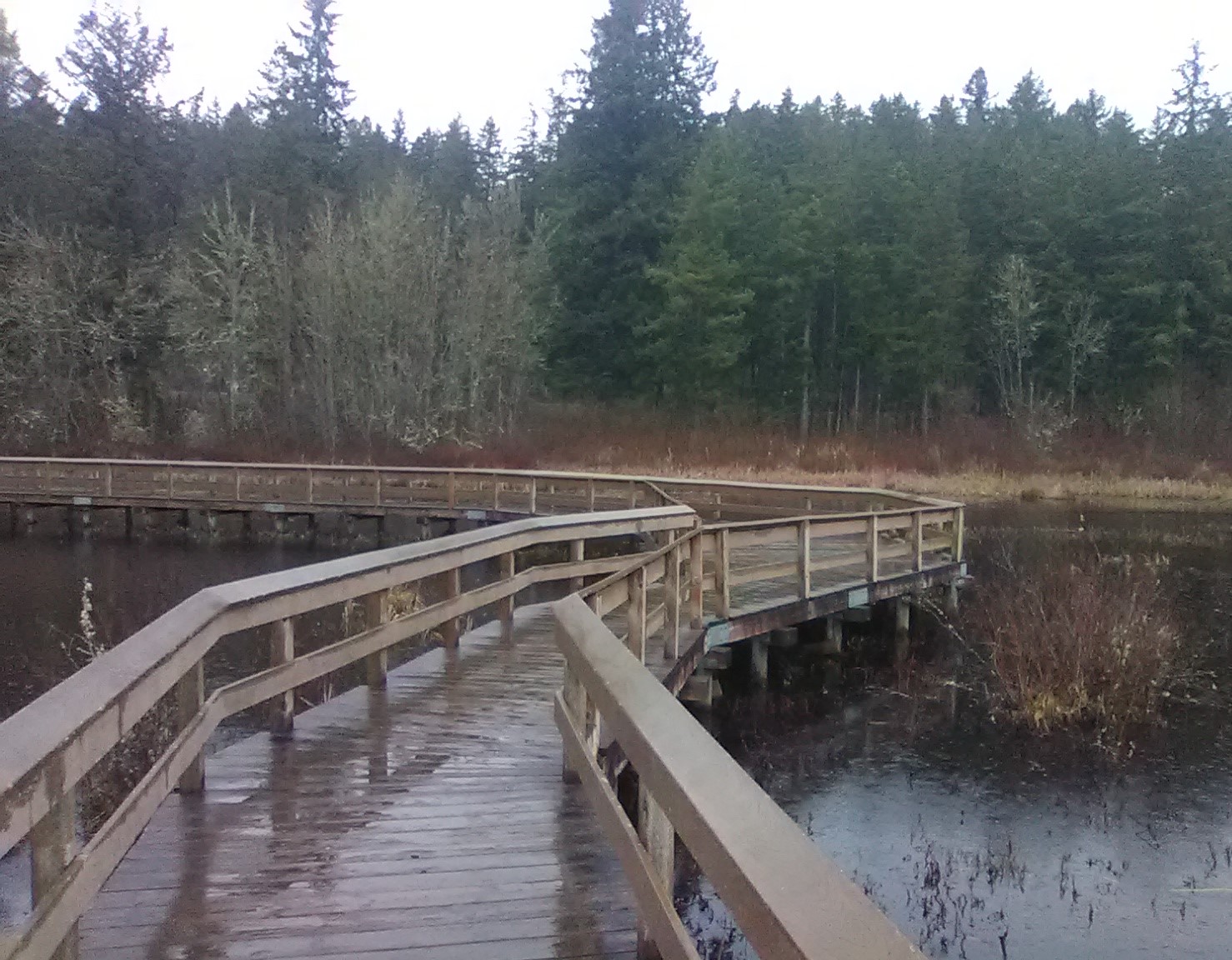
Boardwalk - Seaquest State Park
Canal Road is likely a spot I'll return to down the road, as several species of owls (all the ones above, as well as Western Screech and Barn) have been seen and heard along this road. I found some Canada Geese, Mallards, and American Wigeon on my way back to the highway, but nothing more. Seaquest did get a proper visit from me, now that the sun was up. I used the trails as an opportunity to shake out the legs. The one from the main parking lot swings out onto a boardwalk, taking the walker out over water, back onto land, and back and forth again. Common Mergansers, Double-crested Cormorants, Golden-crowned Kinglets, Chestnut-backed Chickadees, American Crows, and Ruby-crowned Kinglets were all seen and heard as I walked. 

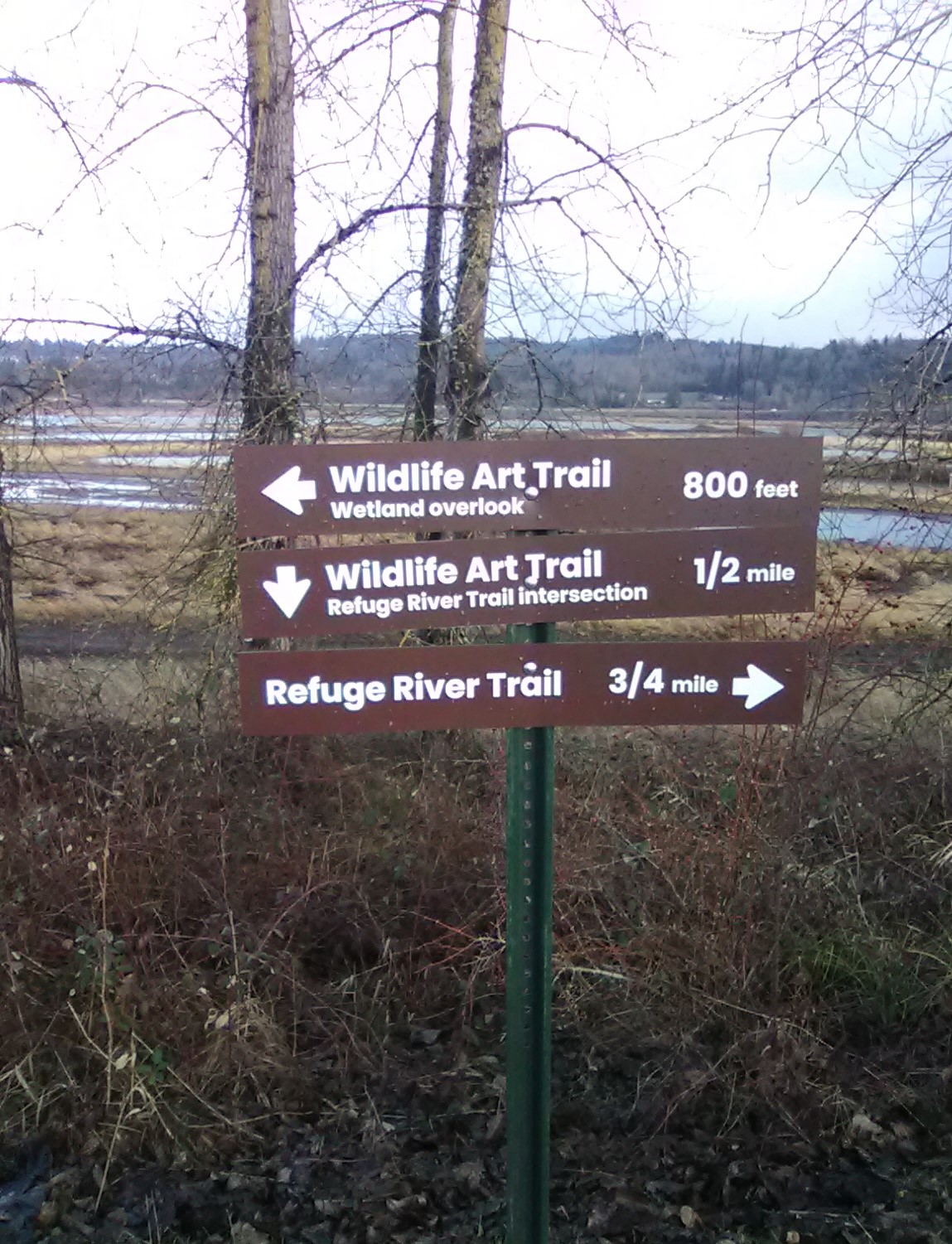
It was also nice to get a little history lesson on Spirit Lake:

One of many informative signs along the interpretive walk.


Castle Rock

Despite having only one new species to show for it, I thought this had been a nice little bit of exploration, so I returned to Castle Rock, found The Vault - Books and Brew, and got settled in for some coffee and work. 

What a nice little place! I had a good spot with a plugin, and there were many other seating options, including little couches, sprinkled around the bookstore. Local art was on sale throughout the store, in addition to the books themselves. I didn't take advantage of the baked goods, sandwiches, or ice cream on this particular day, but I will be sad if that turns out to be my last trip to the Vault!

As I worked, I also exchanged a few emails with Russ from Cowlitz County. He mentioned a few birds that could be found if I wanted to take a look on Canal Road. I nodded as I read the texts but thought that a trip down to Woodland was going to be unlikely. I don't know exactly how long it took me to realize. . . This was not "Dike Road" from Woodland, but "Canal Road" from Youwerejusttheredude. 

One of the birds that had been seen regularly was a Northern Shrike - a code 4 bird that is seen not-quite-annually in Cowlitz. I was in. 


I took this video from the streets of Castle Rock. I was confused, trying to figure out where the music was coming from?? It was from speakers ON the light posts.

Back to Canal Road

Wetlands at Canal Road, near Toutle
Pushing through past noon, I finally got packed up and went back up the Highway to Canal Road. As described, out at the very end of the road (near the horse gate I'd seen earlier) there was a field above a wetland. Scanning and trying different parts of the field finally paid off, with the Northern Shrike (72) visible on a branch, perched very close to three wild horses. 

What a treat to get to see both! I don't know how common it is to get a view of them, but they are the only herd of wild horses in the western half of the state. I read a little more about them here.

In addition to the Northern Shrike, I picked up a Pileated Woodpecker (73) here, calling in the distance, and easily heard despite a light wind, and the grumbling of chainsaws in the nearby hills. I tried the water for Northern Pintails and Eurasian Wigeon but came up empty. 

Continuing back on Canal, towards the highway, I passed a pretty amazing feeder. Here I got my first Red-breasted Nuthatch (74) and Steller's Jay (75) of the year. Mourning Doves, Dark-eyed Juncos, Golden-crowned Sparrows, Song Sparrows, and six (!) Spotted Towhees also used the feeder. 

Home

Satisfied with the quick trip down, I returned along I-5, sweeping up to Imboden Road again and finding a Hairy Woodpecker (76) along the river. 

Day 4 complete

Six more birds. Worth it? It was three code 1 birds, a code 2 birds (the Pileated Woodpecker), a code 3 bird (the Northern Saw-whet Owl), and a code 4 (the Northern Shrike). From all I can tell, 150 for the year in Cowlitz is not going to be too hard! So, I have started to look at the possibility of 175 for my life list. 175 birds would mean seeing all of the code 1, code 2, and code 3 birds, roughly. Each time I find a higher coded bird (like the shrike), it eases a little bit of the planning. 

More than that, I really liked getting a first look at the Toutle area. I'd never birded there before, and I mean. . . wild horses! So yes. This was a nice way to spend the day for sure.

Thursday, January 12, 2023

January 3rd - Steigerwald and Woodland Bottoms

Steigerwald National Wildlife Refuge

Waking up on my gracious host's couch, I had vague thoughts of trying for owls in the morning. Fort Vancouver had a few recent reports of Barred Owls, and they are often pretty responsive. But sleep won the morning. I got a coffee fill in my brand-new Cowlitz County coffee mug and zipped out the door to meet Les and Cindy.

Steigerwald is a neat place that I'd visited before, sitting near Camas and Washougal along Highway 4. It also sat on the East end of Clark County, important because I hadn't started the day with a 100 percent plan on how to do the day. Wilson Cady, next door in Skamania County, had been letting me know of weather conditions to the east, and it wasn't looking super. I'd originally hoped to do a Skamania County big day, but the ice on the roads wasn't expected to melt until at least mid-morning. 

Even at Steigerwald, there was a wicked cold east wind coming down from the gorge - something that made birding a challenge. As I arrived, Cindy was already there, putting on layers. I thought about this as a King County birder. We really don't have to pay quite as much attention to the weather reports, but it felt like *all* of the Clark/Skamania birders I'd come across were keenly aware of it. I think the thing is. . . it's just so often bad weather. So, there are some windows where the weather is downright pleasant for birding, and other days where it just makes sense to stay socked in at home.

Les arrived and repeated the same process of putting on layers of insulation and wind-breaking fabrics. I kind of figured I was in for a cold morning! Steigerwald had gotten a bit of a remodel in recent years - all efforts to better support the wildlife, while still trying to provide good views for people walking the trails. Most of our walking was on an elevated berm, where we got slammed by the aforementioned east wind all morning!

Most of the day *looked like this*. Looking down
at flooded fields/shallow ponds, depending on how
those are even differentiated.

Our target birds were some uncommon birds - Horned Larks - and a downright rare bird - a Lapland Longspur. They'd been seen off and on over the last week or so (longer for the larks), and to be honest, I figured even if we missed them that a nice long walk with these two skilled, knowledgeable birders would be pretty productive!

Before even heading up to the top of the berm, we made a bathroom stop. This was not a bad idea on a morning when we would be putting in 4-5 miles of walking over the course of 5 hours or so. A few easy birds were seen and heard as light started hitting the parking area: Canada Goose (2), Cackling Goose (3), Northern Harrier (4), American Kestrel (5), American Crow (6), American Robin (7), and Common Raven (8).

From here, a short climb brought us on top of the berm, and oh my lord it was windy, and cold to boot. I'm sure the Horned Larks and the Lapland Longspur had been enjoying exactly this kind of weather, making them feel right at home. In most winters, these birds are more common on the Waterville Plateau in Douglas County, which can also get icy cold!

We turned scopes back towards the sewage ponds on the western edge of the refuge. It was full of dozens and dozens of ducks, including Northern Shoveler (9), Gadwall (10), American Wigeon (11), Mallard (12), Ring-necked Duck (13), Lesser Scaup (14), and Bufflehead (15), as well as the ever-honorary ducks - American Coots (16). A Great Blue Heron (17) took flight as we picked through the ducks, one of many seen during the morning.

So, there we are in the middle of these wind gusts, and Cindy calls out "Western Meadowlark! Did you hear it?" I paused, listened to more wind. "There it is again!" I listened to more wind. I didn't even hear anything that sounded like a bird. But they showed. I can't remember if it was a half-minute later, or five, but I'm just saying. I'm no expert on the occult but am nonetheless 95% certain that witchcraft was being practiced here.
And she speedwalks

Folks, this was NOT the last time this happened. I just skimmed our list, and there's like. . . 8 birds in there that Cindy heard an hour before I did. Not an hour. But LIKE an hour. My ears really aren't bad! In a typical group of birders, there are usually 1-2 other people who are picking things up at about the same time as me, and others eventually hear the birds. I've literally (and I hate the overuse of that word. I am using it for its intended use) never had the situation reversed like this. 

And not only that. Cindy would also call them out correctly. I hear things *very* well, but there are times where my brain goes right to the wrong bird on the first listen, "Flamingo!" might become "Black-capped Chickadee" once I have a better listen. I exaggerate, but. . . goodness. There's a lot of amazing birders out there with their own different sets of skills, but Cindy may be the best ears I've been with. There's one guy I'd need to drag into a windstorm for a proper test. That's the only reason I say "may". 

With that context in mind, now I can say "We found a half-dozen Western Meadowlarks. (18)" and you now have a better understanding of what I mean by "We".

The mud to the left of us had some shorebirds as well. Killdeer (19), and Least Sandpiper (20) called from the soggy gray expanse. A small flock of American Pipits (21) also landed on the shore below us. "Junk" birds continued to appear as well: European Starling, Red-winged Blackbirds (22), Song Sparrow (23), and California Scrub-Jays (24). We continued to watch Northern Harriers actively hunting, with a couple instances where they were hunkered down on the ground. By day's end, we had seen four of them, including both male and female birds.

As I typed "male and female", I will admit that I paused. Every once in a while, I see birds referred to as "male type" or "female type". I've tried to casually poke around on the Internet to find a nice explanation of this usage. I've come up blank. Help! What are people on about when they add "type"? 

(placeholder for the great explanation that is going to get emailed to me)

We scanned a flooded area around some trees, hoping for Wood Duck, finding Hooded Mergansers (25) instead, with a Downy Woodpecker (26) calling from the trees. A Red-tailed Hawk (27) flew overhead, and a Marsh Wren (28) popped up close enough for nice views on the right side of the dike.

Any time spent lingering in a good spot will usually result in more species observed. We were lingering big-time, as we really hoped that the Horned Larks and their special friend would show up on this first stretch of the dike. What we got instead: American Goldfinch (29), Dark-eyed Junco (30), Golden-crowned Sparrow (31), Spotted Towhee (32), and Northern Flicker (33). 

Les and Cindy have birded together quite a bit, and had some routines down pat, including eBirding as they went. So, each time we encountered a new flock of sparrows, things were getting added immediately and accurately. I say this because our list includes 72 Golden-crowed Sparrows! I try when I'm out on my own, but it was honestly a beautiful thing to see how they worked together to make this happen. With any new bird sighting, getting the data was nearly always the immediate priority. 

I will gladly beat the drum for good citizen science data. Mine is getting better. (Some readers just went wide-eyed, imagining me having more shortcomings as a birder than I presently do!) It's definitely one of my resolutions for the year.

We finally rounded the bend, with the Columbia now to our right, as well as the northern shore of Reed Island (which I just discovered is one of our state parks). The trees lining the bank held a nice mix of passerines, including Black-capped Chickadee (34), Golden-crowned Kinglet (35), Brown Creeper (36), Bewick's Wren (37), and Yellow-rumped Warbler (38). In the river itself, we had Double-crested Cormorants (39).

The trail here is not a loop. We bemoaned that fact, while also recognizing the value of that for the wildlife. But at one point, we did reach a fork in the road. One trail went inward, towards the center of the whole muddy/flooded/marshy/pond/whathaveyou, while the other continued along the Columbia. we moved inward. From a distance, Bald Eagles (40) were easy to pick out on distant trees, and we also got calls from a Pileated Woodpecker (41). 
Great Blue Heron planted on its real estate

We had several opportunities to see gulls over the course of the walk. A few of these simply got away from me - species-wise. Gulls are often a struggle, even if they're adults, sitting in front of me, wearing a name tag. In flight, even more so. A California Gull (42) did make a nice long glide over the refuge, and Cindy helped point out some of the features that help distinguish gulls in flight. Like the eBird rigor, figuring out gulls in flight a bit better is one of the goals/resolutions/growththingies for the year.

We'd seen swans from the entrance, but they were a little hard to get in the scope. Here we finally got a peek-a-boo view of one of the Tundra Swans (43). We also talked about the calls a little bit. My previous distinction: Trumpeter Swans sound like trumpets. Tundra Swans. . . don't. But I picked up a fun new one from Les and Cindy: "Tundra swans sound like they're having a Tun of Fun. Woooo! Woooo!!" 

Even typing it now gives me the giggles. That one will stick.

A Hairy Woodpecker (44) eventually was close enough for me to hear it. Again, I. . . I mean it's probably witchcraft. As we now had a better view of more of the central ponds (I'm going to give up on deciding when to distinguish a pond from a flooded field for now), we started picking up more species of ducks, including huge numbers of Green-winged Teal (45), and Northern Pintail (46).

Following the path inward, we had some good luck with sparrows. Many more Golden-crowned Sparrows, a ton of Dark-eyed Juncos, and a great view of a Lincoln's Sparrow (47). We also had a Savannah Sparrow here (48), although I didn't get a good view of one until later in the walk. We crossed a little bridge, with Great Blue Herons sometimes just plopped down in the middle of the trail, certain that we would turn around, rather than cross over their personal little puddle. 

As we entered more trees, we had Fox Sparrow (49), and much better views of Hairy and Downy Woodpeckers. Numerous American Wigeon gave us the chance to search for a Eurasian. We eventually reached the end of this trail and headed back. Cindy and I briefly explored a little further down the branch of the trail that went along the Columbia. She added more Golden-crowned Sparrows, and Meadowlarks to the list, but we never pulled out anything too strange, as sparrows go. 

While we came up empty on the big prizes, I got a great walk in, got to bird with some lovely people, and came away with 49 species on the year list for Clark. Some Rock Pigeons in Washougal made it 50.


Decision time in Washougal

HERE was the rub. I was trying to figure out why I was going into the Clark County year with a little less excitement than the other counties. 

Vancouver. 


Seattle, Spokane, Tacoma. . . and then Vancouver. That's your list of the most populous cities in the state of Washington. I know some people really don't like birding in King County because there's just so much traffic to deal with. 

Vancouver is smaller than Seattle, land-area-wise, but it's still pretty big! And 50 or so square miles of urban sprawl in a county that's only 600 or so square miles to start with. . . it's just different from the places I have been birding for a few years. Narrow it down more in the winter, when some roads just aren't open. I saw where some good birds had been found - Rough-legged and Red-shouldered Hawks, Acorn Woodpeckers, an American Tree Sparrow - and I just got claustrophobic thinking about having to go *through* Vancouver to get to them. 

Skamania was going to leave me too far away from home, and for not as many birds as I would have hoped, given the hour of the day. 

So, I bolted. I decided that adding some birds in Cowlitz County might be the best way to finish off the trip, leaving me closer to home as well, once the sun was headed down.

Woodland Bottoms

This place is one that I've visited a few times. It's easily accessed from I-5, and there are many places to pull off and scan huge fields. I just did a check, and following this trip, my life list from Woodland Bottoms had grown to 86 species. Over half of the birds on my Cowlitz life list had first been seen along these wide-open fields. By design, that should change this year. Getting to 150 species for the year is going to require a lot of moving around, especially when spring and summer come, opening up some high elevation areas. 

I have a funny relationship with these Really Good Spots! They bring in a lot of species to help me towards my goal. But part of the purpose of these years is to explore! Nonetheless, the lure of Sandhill Cranes and Rough-legged Hawks was enough to pull me in. 

I actually landed on a big flock of gulls very early on. Hopefully, even in these short few posts I've made, one thing has become clear - I struggle with gulls. This particular flock was close to the road in a flooded field and was almost entirely Short-billed Gulls (64 for the year in Cowlitz), accompanied by 5-10 Great Egrets. One larger gull in the group turned out to be a Herring Gull (65). The big chonky bill, pale iris, light mantle, pink legs, and dark primaries made this one an easy ID. Thank the lord.

I found no Rough-legged Hawks as I'd hoped, but Northern Harriers (66) were a nice addition. 

Taking the roads all the way to the Columbia, and heading North, I took it all the way to the end of the line. Common and Hooded Mergansers were in the Columbia. For one of the first times on the trip, I had to remind myself that the other side of the river was Oregon. In this case, the state line runs right through mid-channel. 

A productive spot
Heading back down along the Columbia, I found a nice pull-off. A couple of homes lined the "exit", along with a lot of trees, as it dropped down towards the Columbia. Here I got my first Varied Thrush (67) of the year, and my first Horned Grebe (68) as well. 

At another pull-off, looking at the Columbia, I saw a large mammal cresting in the water. Seal? Sea Lion? I was admittedly flat-footed, not having brushed up on my sea mammals before heading out! I did find an eBird report from the same day at another point on the river that reported an increase in these mammals, potentially following a smelt run. This was also given as a potential reason for the sightings of Brandt's Cormorants upriver as far as Portland.

Continuing through the loop, I came across more of the same gulls, more Red-tailed Hawks, Bald Eagles, and American Kestrels. After passing some small groups of Sandhill Cranes (69), I finally found about 200 of them together in a field. This was the place where I'd added these birds to my life list years ago. Woodland Bottoms is one of the reliable places to find them in Western Washington in the winters. I finished the day with one more addition, as a pair of Trumpeter Swans (70) flew overhead calling. 

70! Not a bad total for Cowlitz, given the way I'd spent the time - crunched in a single area for the CBC, and then crunched for time on this day. It will be interesting to see how weather, rare birds, and whim affect my plans for February! It seems pretty certain that I'll have to get to Skamania! Cowlitz just kind of feels on track. Wahkiakum is off to an amazing start. And Clark . . . Clark is at 50. I did like that I got hours and hours of walking done in Clark. Maybe that will be my play for the year: Only walk for birds. One stop each month in Clark - only walking in a really good spot. Then I can't complain about traffic as much!  We shall see. 

Day 3 completed

Camera update: I had my camera misbehaving last year, got it fixed, and had the same dang thing happen again. The shop where I'd brought it before will be repairing it for free, and we'll be right back to distant fuzzy pictures of birds!

12/28-30/2025 - Christmas Bird Countin'!

Doing four counties in one year was naturally a mistreatment of all four counties. Clark, Cowlitz, Skamania, and Wahkiakum all had more inte...